
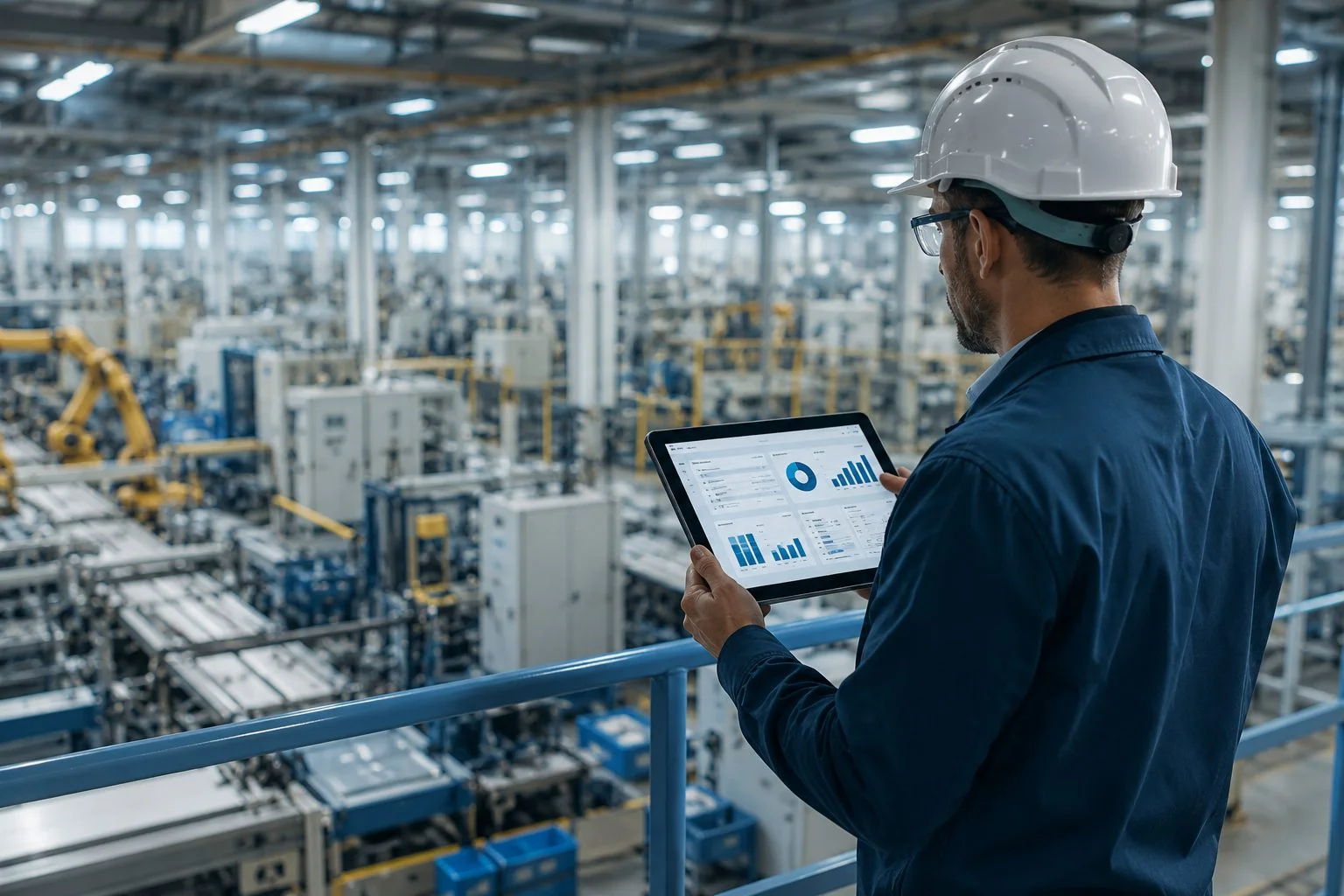
Benefits Of ERP Systems in Manufacturing Business
Manufacturing businesses across Alberta face constant pressure. Orders must go out on time. Costs must stay under control. Quality cannot slip. The demands of a stable system become harder for operations managers and IT directors in growing manufacturing firms. The scattered systems and software for different departments create gaps where errors hide.
Enterprise resource planning (ERP) systems solve all these problems. An ERP brings everything together into one unified platform. How ERP streamlines manufacturing processes becomes clear when businesses see the transformation. From the shop floor to the front office, every department works from the same information. Decisions are faster. Mistakes are fewer. The business runs more smoothly.
Automation
Manual processes drain time and create errors. A production manager might type order details into one system while accounting uses another. The same information gets entered multiple times. Each entry is at risk of typos or missing details.
Process automation within an ERP eliminates this repetition. When a sales order comes in, the system automatically creates work order management tasks for the factory floor. Materials requirement planning (MRP) calculates what raw materials are needed. Procurement teams receive automatic alerts to order supplies before stock runs low.
How ERP improves manufacturing processes through automation is measurable. Workers no longer spend hours on data entry. They focus on production instead. Orders move faster from entry to delivery. The 22% productivity gains that manufacturing leaders seek become achievable when automation replaces manual work.
Data Security
Manufacturing businesses handle a large amount of sensitive information. The information requires protection: customer contracts and supplier agreements. Spreadsheets shared by email create security risks. Multiple copies exist in different places. Access is hard to control.
An ERP centralizes data in a secure, real-time data tracking system. Access permissions determine who sees what. A shop floor supervisor sees production schedules but not payroll details. A CFO sees financial data while line workers see only their immediate tasks.
Data security also means protection from loss. Paper records can burn. A hard drive failure can result in the loss of all the data on a single computer. Whereas, cloud-based ERP systems include automatic backups and disaster recovery. The business operations continue even when unexpected events occur.
A manufacturing business in regulated industries needs security compliance. ERP systems provide audit trails that show who accessed what information and when. It is enough to provide visibility that satisfies observation requirements and provides peace of mind.
Organized Workflows
Chaos on the factory floor costs money. Workers wait for materials. Machines sit idle. Rush orders disrupt planned schedules. Managers spend time putting out fires instead of improving operations.
An ERP brings organized workflows through production scheduling and factory floor control. Every work order has a clear sequence. Resource allocation happens automatically based on machine availability and worker skills. Production managers see the entire schedule at a glance. They know which jobs are on track and which need attention.
How ERP streamlines manufacturing processes in this area is straightforward. When materials arrive at the loading dock, the system knows exactly where they go. When a work order is complete, the next order appears automatically. The chaos of last-minute changes and fire drills diminishes.
Order processing becomes smoother, too. Customer service representatives see real-time inventory and production status. They provide accurate delivery dates without checking with multiple departments.
Cost Reduction
Cost control is a constant focus for CFOs and operations directors.
- Raw material costs fluctuate.
- Labor rates rise.
- Overhead expenses accumulate.
- Without clear visibility, costs spiral upward unnoticed.
Cost control becomes achievable with ERP systems. How ERP improves manufacturing processes for cost management starts with accurate data. The system tracks every expense against specific work orders. Material costs, labor hours, machine time, and overhead allocation all appear in one place.
Managers see which products are truly profitable and which lose money. They identify waste and inefficiency. Inventory management improves as the system prevents overstocking and stockouts. Both situations tie up capital and create costs.
Supply Chain Management
A manufacturing business depends on suppliers. A delay in raw materials stops the entire production line. Most problems arise when there is poor supplier coordination at both ends.
Supply chain optimization is done through an ERP that transforms supplier relationships. The system forecasts material needs based on production schedules. Purchase orders go out automatically when stock reaches reorder points.
How ERP streamlines manufacturing processes across the supply chain includes supplier performance tracking. Managers visit the suppliers to deliver on time and check where the delays happen. It informs purchasing decisions and strengthens supplier relationships.
The manufacturing businesses with complex supply chains can take advantage of the system. ERP provides end-to-end visibility and tracks down material from the supplier to the warehouse, then to the production floor, and to the customer. ERP also identifies problems early and offers solutions that are implemented before customers are affected.
Customer Satisfaction
Customer satisfaction is the most important thing for a small manufacturing business. Late deliveries damage relationships. Quality problems lead to returns and lost business. Poor communication frustrates customers and creates tension.
ERP systems improve customer satisfaction through reliability. Order processing accuracy means customers receive what they ordered, not something similar. Production planning makes sure that the orders ship when promised. A quality assurance checkpoint catches defects before products leave the factory.
Live data tracking allows clear communication. Customer service teams see production status instantly. When delays occur, they notify customers before delivery dates pass. Customers appreciate transparency even when problems arise.
Transform your manufacturing operations from reactive firefighting to proactive management with ERP automation. Get your personalized ERP roadmap from Blue Sky Consulting and start scaling your Alberta-based business with confidence.
Conclusion
There are many benefits of ERP Systems in manufacturing businesses facing operational chaos, disconnected systems, and scaling pains, ERP systems provide a clear path forward. ERP in the manufacturing business transforms how work gets done. Manual processes give way to process automation. Data silos become centralized information. Reactive firefighting becomes proactive management.
The ERP benefits for manufacturing extend across the entire organization. CFOs gain accurate cost control and faster period closes. Operations managers gain production scheduling tools that eliminate chaos. IT directors gain secure systems that protect business data. Customers gain reliable delivery and consistent quality.
Frequently Asked Questions
What are the main benefits of ERP in manufacturing?
The main benefits include automation of manual tasks, centralized data for better decisions, organized workflows that reduce chaos, cost control through accurate tracking, improved supply chain coordination, and higher customer satisfaction from reliable deliveries.
How does ERP improve production efficiency?
ERP improves efficiency by providing production planning tools that optimize schedules, factory floor control that directs work to available resources, and real-time data tracking that identifies bottlenecks before they cause delays. Work order management ensures every job follows the correct sequence.
Is ERP only for large manufacturing companies?
No. Modern ERP systems serve manufacturing businesses of all sizes. Cloud-based options make ERP affordable for small operations. Modular systems allow businesses to start with essential features and add more as they grow.
How long does it take to see ERP benefits?
Some benefits appear immediately. Centralized data eliminates the need to search multiple systems. Other benefits take longer. Cost control improvements become visible after a full business cycle. Production efficiency gains emerge as teams master new workflows. Most manufacturing businesses see significant returns within six to twelve months.
What manufacturing processes does ERP cover?
ERP covers the complete manufacturing cycle. Materials requirement planning (MRP) ensures raw materials are available when needed. Production scheduling coordinates work orders across machines and workers. Inventory management tracks materials from receipt to finished goods. Equipment management monitors machine performance and maintenance needs. Business intelligence provides insights for continuous improvement.